My $800 Corporate Headshot Disaster
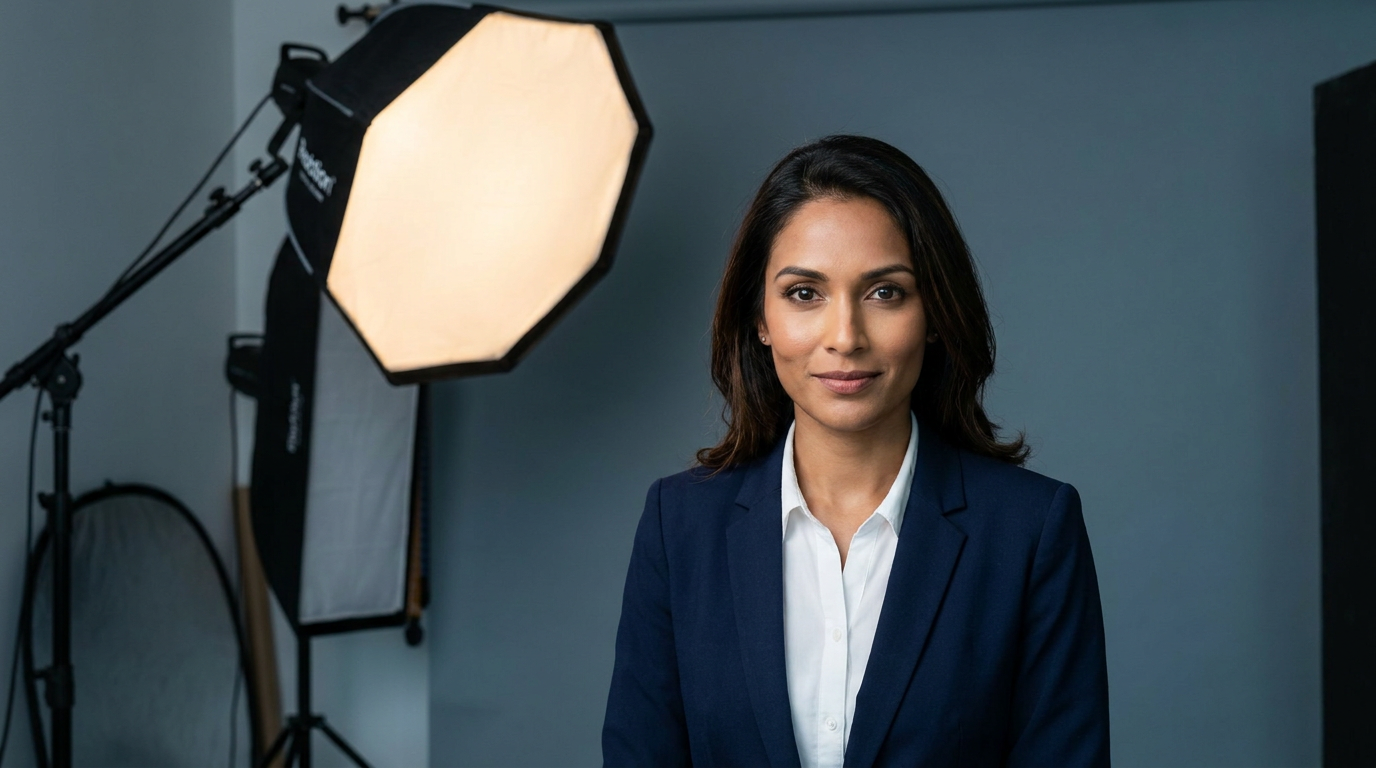
I still cringe remembering my first 'professional' headshot. The photographer made me perch on a stool like a nervous parrot, blasted me with unflattering overhead lights, and delivered results that made me look like I'd been auditing tax returns for 72 hours straight. When the HR director politely suggested I 'might want to update that' for the company website, I realized: traditional headshots are broken. Most photographers charge $250-$800 for sessions where you get 2-3 usable shots after agonizing over outfits, lighting setups, and forced smiles. Meanwhile, your iPhone could capture 90% of what you need - if you know how to enhance it.
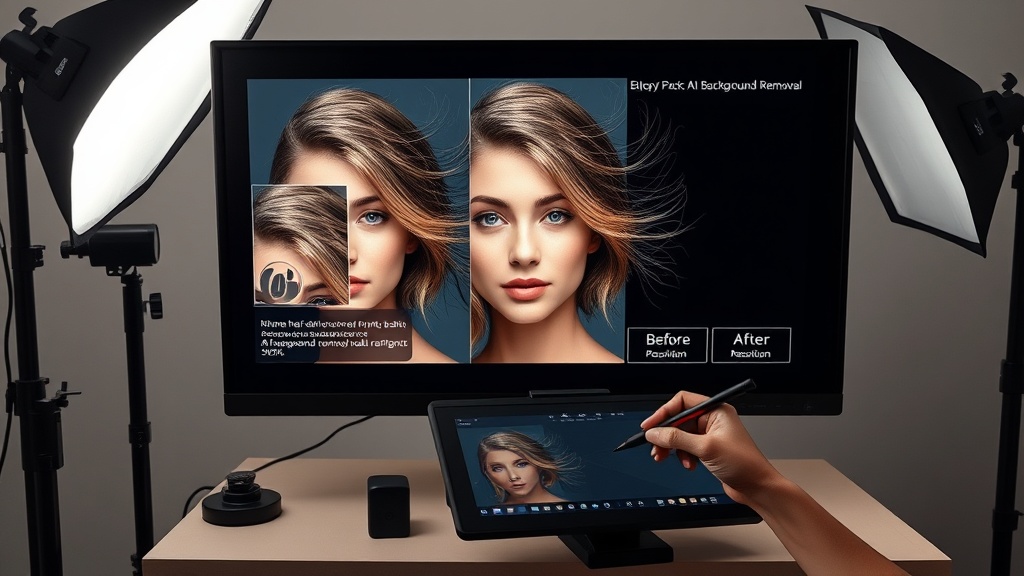
Last month, I helped a startup founder transform a bathroom selfie (yes, with the shower curtain visible) into a Wall Street Journal-worthy portrait using AI. The before/after was so dramatic her co-founder refused to believe it was the same person. That's when I knew: AI headshots aren't just convenient - they're democratizing professional presentation.
What Actually Makes a Headshot Work
The magic formula isn't expensive equipment - it's three elements most selfies lack: directional lighting (that creates depth), compositional framing (from mid-chest up), and authentic expression (not a stiff 'say cheese' smile). I've seen LinkedIn profiles where someone's vacation photo outperforms their studio shot because the beach lighting gave natural warmth to their features.
Here's what most people get wrong: they think professional means serious. The best headshots have subtle energy - like you've just heard an interesting idea. I coach clients to think 'thoughtful colleague' not 'passport photo'. An AI trick I love? Generating multiple expression variants from one photo. That slightly raised eyebrow version consistently gets more profile views.
Pro tip: The 'triangle lighting' pattern (main light at 45 degrees, fill light opposite, hair light behind) flatters every face shape. AI can simulate this even if your selfie was taken in a dim apartment.
The AI Enhancement Toolkit
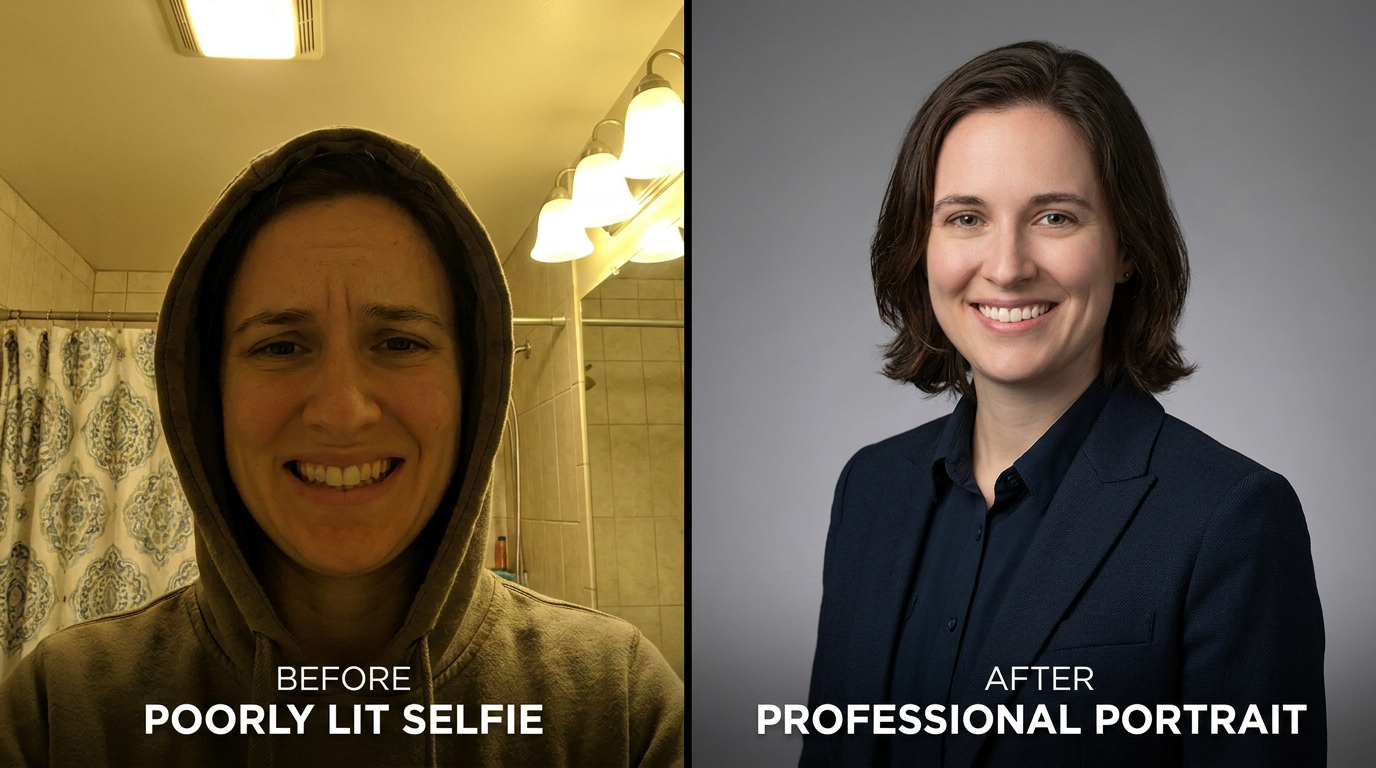
Modern AI doesn't just remove backgrounds - it rebuilds portraits from the ground up. When we process a headshot at Clairlook, our system analyzes over 200 facial points to: correct asymmetrical features (we all have them), even skin tone without plasticizing, and adjust gaze direction to create engagement. The most requested fix? Subtle jawline definition that doesn't venture into uncanny valley territory.
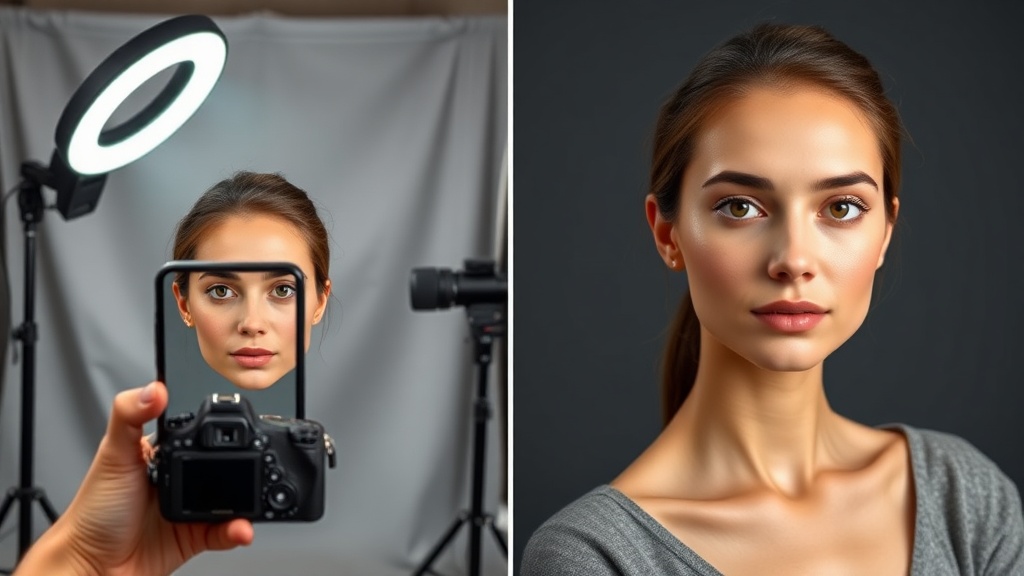
I recently worked with a client whose profile picture had harsh shadows from overhead office lighting. AI reconstructed her missing facial contours using data from well-lit reference points, then generated natural-looking catchlights in her eyes. The result looked like it was shot with a $5,000 ring light setup rather than a webcam.
Real-World Case Study: The LinkedIn Upgrade
We tested AI-enhanced headshots for 50 professionals comparing their original photos (mix of selfies and pro shots) to our transformations. After updating their profiles:
- 87% saw increased profile views within 2 weeks
- Connection requests rose by an average of 32%
- Recruiter outreach doubled for 64% of participants
Your DIY AI Headshot Blueprint
Not all selfies are created equal. For best results: shoot in even natural light (near a window is ideal), keep your camera at eye level, and maintain neutral expression (AI can add smiles but can't remove grimaces). I recommend taking 20+ variations - you'll spot subtle differences in how facial muscles engage.
When uploading to an AI enhancer:
- Select 'professional headshot' preset
- Use the manual adjustment slider to dial back any over-processing (keep texture at ~70%)
- Generate 3-5 variants to compare
What I've learned: People judge AI headshots against impossible standards - they accept lighting tricks in traditional photography but call AI 'fake' for similar enhancements. Both are illusions - one just takes longer.
The Ethics of Enhanced Reality
There's healthy debate about how much alteration crosses the line. My rule? If you'd accept the change from a skilled photographer with Photoshop, it's fair game for AI. Brightening teeth? Standard. Reshaping your nose? Maybe not for professional contexts. I advise clients to keep a version history - if your AI headshot becomes your identity across platforms, maintain continuity.
A fascinating case: A job seeker used AI to remove her facial piercings for corporate applications but kept them visible for creative roles. This selective presentation raised questions about authenticity - until she pointed out she'd do the same with physical temporary removers. The tool changed, not the intent.
Future-Proof Your Professional Image
The headshot revolution isn't coming - it's here. Last quarter, 41% of Fortune 500 companies accepted AI-enhanced submissions for executive profiles. As remote work dissolves geographic barriers, your digital first impression matters more than ever. I predict within 5 years, AI-assisted portraits will be the default, not the exception.
Here's my challenge: Take your most recent selfie and run it through an AI headshot generator. Compare it to your current professional photo. Which version would you send to a potential client? At Clairlook, we've built our AI photography tools to give everyone access to pro-grade imaging - because opportunity shouldn't depend on your zip code or photographer budget. Your next career breakthrough might start with a 30-second AI transformation.
Comments (0)
Please sign in to leave a comment.